Why are we alive?
A question that's been asked since the dawn of civilization and probably a long time before that too. The ancient Mesopotamians posed philosophical questions inquiring into their existence, as did the Chinese, the Greeks and Romans, the Mayans, the Indians, and the Europeans. For many millennia, countless civilizations have grappled with the reason for our very being. Yet, none of them succeeded in the finding the answer.
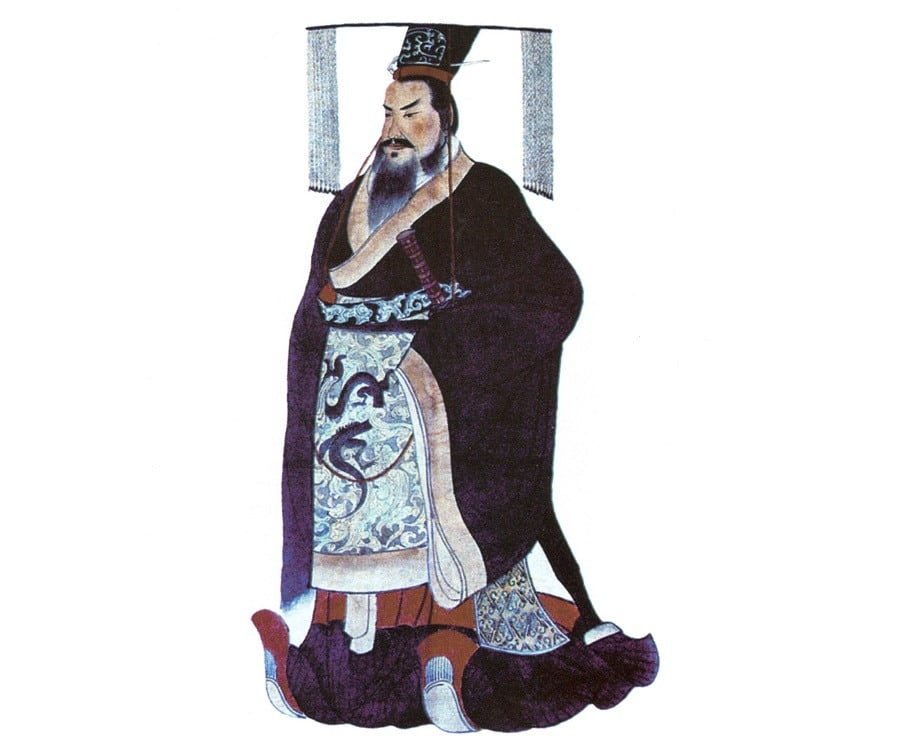
Have you ever questioned your own existence? The futility of your actions? No matter what you do, you're just one person in a small community in a small city in a small country frozen in this moment in time (wait, the moment just passed, I meant the next moment) and that your life (of maybe 100 years if you're really lucky) is but a grain of sand in the deserts of time. Look at 秦始皇 (Qin Shi Huang), the first king of China. I bet he thought he was a hotshot and that people would think about him for the rest of time. But wait, I'm having trouble putting a face to the name. Why? Because he doesn't matter. His life (49 years) is a casualty of time.
The Dialogue of Pessimism, an ancient Mesopotamian dialogue, outlines the futility of our actions. Basically, a master is asking his slave about a course of action and the slave agrees. Then the master changes his mind and the slave also agrees. Through this dialogue, the author/carver (it was carved on a tablet) is essentially telling the reader that life is absurd and what that you do doesn't matter.
In the Song of Solomon, Milkman tries to convince Guitar that the Seven Days ain't worth his time. He says, "none of that shtuff is gonna change how I live or how any other black dude lives"(slightly paraphrased to keep this PG). Guitar isn't convinced and he remains a part of the Seven Days. We readers know that Milkman is right. In the words of the great Shakespeare, "Life is a tale told by an idiot, full of sound and fury, signifying nothing."

No comments:
Post a Comment