Sunday, November 18, 2018

Do you really want money?


Doesn't everyone want money? We work hard to earn better wages, so we can buy better things. And when you have better things, your life becomes better. That's written clearly in the handbook of life: make money-buy things-be happy. But is that really all there is to it? There are really lucky (unlucky?) people who's lives are turned upside down because they: won a lottery, found a HUGE diamond, got a hand that turns things into gold. These people were suddenly granted their greatest desires, money. They became millionaires, trillionaires, and gajillionaires. And not one of them found happiness. It's a well known fact that lottery winners live terrible lives. They lose their friends, file for divorces, get murdered, suicide, all kinds of undesirable outcomes. In The Diamond as big as the Ritz, the Washington family is quite well-off since they're ancestor found a diamond as big as the Ritz. In the end of the story however, 3/5ths of the family goes poof and becomes ash while the other 2/5ths are condemned to a life of poverty. Certainly undesirable. Everyone knows the story of King Midas, he who turns things to gold with his touch. He accidental touched his daughter and she turned to gold. In a way, she lives forever but not "really" alive. Also undesirable. Through these three examples, the negative effects of money can be seen. The question remains, do you really want money?

Related image

Sunday, November 11, 2018

What is 100,000?


What is 100,000? It's just a number composed of 5 circles, a line, and a comma. But what does it really represent? The population of Ann Arbor is around 100,000, it's more than three times the height of Mt.Everest, weather balloons start to explode around 100,000 feet in the sky. 100,000 is a really BIG number. Yet the population of Ann Arbor doesn't astonish me, 3 times the height of Mt.Everest doesn't really overwhelm me with awe, and a weather balloon exploding in the sky certainly doesn't incite a sense of wonder. As humans, we've lost our "number sense". Large numbers are no longer special because our world has expanded so much. We're no longer cramped in town or city we lie in, we can experience the whole world. This expanded worldview has lead to incredible innovations and discoveries, but it has also lessened our sense of wonder.

Many writers have written books that warn humanity of a coming crisis or mock societies current direction. Fitzgerald mocks the rampant materialism of the 1920s in The Great Gatsby. Orwell allegorically ridicules the Soviet Union in Animal Farm. Huxley warns us of the dangers that rapid advances in technology can cause in A Brave New World. Golding highlights the inherent savage nature of humans and the negative impacts of war in Lord of the Flies. Many great writers have written even greater books detailing the troubles within society. Yet no one has even mentioned how humans have been desensitized to magnitude and size.
Related image

Sunday, November 4, 2018

Tales from the North

Two strangers met in a bar. One from Chile and one from Colombia. As all bar talk tends to do, their conversation turned towards their lives at home. The Chilean man spoke of cold summer days spent toiling in the fields and even colder winter nights spent huddling in a hut.
    "Ah, how warm it must be in Colombia. With all the full bosomed women, it must be paraíso."
The Colombian shook his head.
    "Colombia is no paraíso. I'd give an arm and a leg to live like you do. But alas, a wife and baby need supporting and there's only one way to do that in the North. Drugs and cartels."
The infamous couple, known to many yet understood by few. Lives are harvested by the cartels which in turn are used to make and transport the drugs. A vicious cycle ravaging Central America.
    "Perhaps Colombia is not for me," the Chilean muttered.
    "Sí," the Colombian chuckled.
And they grew silent, these two men. Each lost in his own drink, pondering the situation of the other. 


It's the start of the 20th century and racial tensions are running high. A young black accountant heads South for a business trip. It's his first time down there and he's heard all kinds of things on the news. He takes a Greyhound cause, well, he ain't rich and a Greyhound is cheaper than a plane. It's gotta be quite unnerving getting on a bus full of white people so he finds a familiar face to sit beside. Not familiar like two friends would be, familiar like when two black sheep meet in a field of white sheep. Charlie (the other guy's name) was visiting his niece who got into some kind of "smart person" school.
    "So, what's an accountant doing in the South?"
    "A textile company needs their auditing done and I was the only person free at the office."
    "Must not have been your lucky day."
    "How so? I've heard on the news that blacks are finally getting to own property."
    "I don't know what you've been listening to sonny, but life ain't swell in the South if your skin's too dark. I'd reckon that 1000 of our folk gets lynched every year. If you was thinking of getting some sightseeing done, I'd forget that. Do your job and get out."
    "Really? So the South ain't like the North? I've always thought the South would feel like home. After all, it's where my mother and my father were born."
    "Didn't they tell you anything, boy? The South is where all the old money is at. They don't take any guff from your politicians, as such, none of the Northern laws regarding blacks have reached the South so life is basically the same as when slavery was a thing."
    "Ah, I see." The accountant was skeptical of the stories his friends told him but Charlie's story, from a real Southern black, was the last straw.


I was going to write more stories but I ran outa time.

Sunday, October 28, 2018

Snow Mexican


It is generally accepted that human interactions should be cordial. It is generally accepted that people should help other people. It is generally understood that if you treat someone nicely, they'll treat you the same way. If such facts are generally accepted, then why does the Land of Opportunity turn away prospective hardworking citizens? Why was a whole race forced to submit to tyranny?

A whole caravan of people, escaping gang violence and a crumbling government, are being turned away for what? Some claim that they take jobs away from hardworking Americans. This can't be true because they only do jobs that "hardworking" Americans won't do. The POTUS claimed that terrorists are mixed in with the caravan and are hoping to slip into the U.S. unnoticed. This claim was widely refuted by many news sources and even some of the caravan members themselves.

Even after Lincoln signed the Emancipation Proclamation. African Americans were still treated with disdain and disgust. The Jim Crow laws in the South made it so that slavery might as well have not been banned. Segregation caused the deaths of a great many blacks. The Song of Solomon shows us how blacks tried to fight back against white oppression, with largely unsuccessful results.
Related image


Sunday, October 21, 2018

To live, or not to live


Why are we alive?

A question that's been asked since the dawn of civilization and probably a long time before that too. The ancient Mesopotamians posed philosophical questions inquiring into their existence, as did the Chinese, the Greeks and Romans, the Mayans, the Indians, and the Europeans. For many millennia, countless civilizations have grappled with the reason for our very being. Yet, none of them succeeded in the finding the answer.

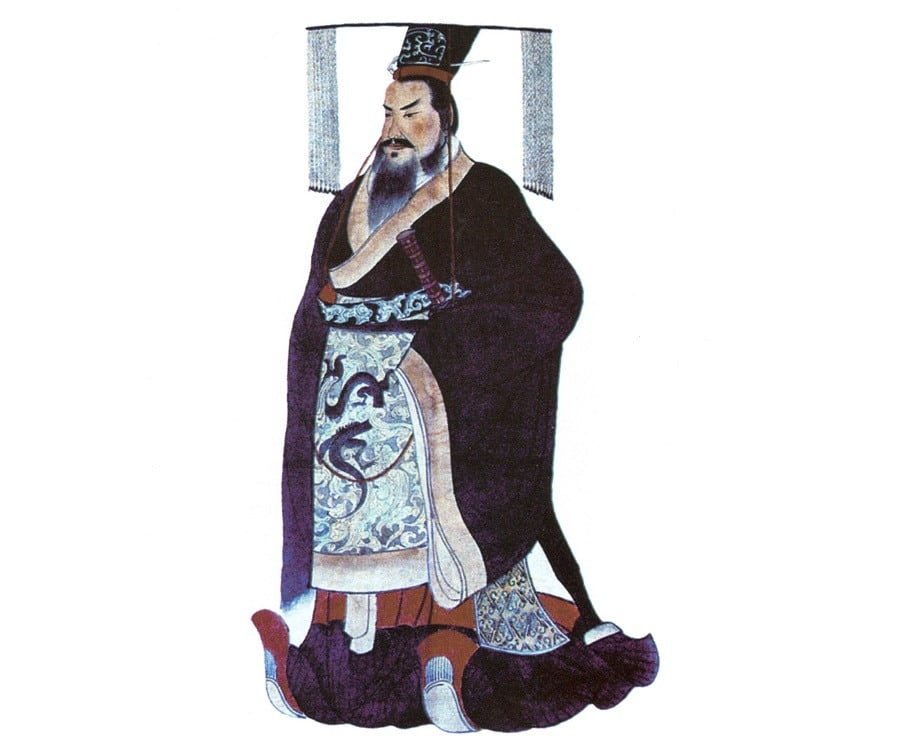
Have you ever questioned your own existence? The futility of your actions? No matter what you do, you're just one person in a small community in a small city in a small country frozen in this moment in time (wait, the moment just passed, I meant the next moment) and that your life (of maybe 100 years if you're really lucky) is but a grain of sand in the deserts of time. Look at 秦始皇 (Qin Shi Huang), the first king of China. I bet he thought he was a hotshot and that people would think about him for the rest of time. But wait, I'm having trouble putting a face to the name. Why? Because he doesn't matter. His life (49 years) is a casualty of time.

The Dialogue of Pessimism, an ancient Mesopotamian dialogue, outlines the futility of our actions. Basically, a master is asking his slave about a course of action and the slave agrees. Then the master changes his mind and the slave also agrees. Through this dialogue, the author/carver (it was carved on a tablet) is essentially telling the reader that life is absurd and what that you do doesn't matter.

In the Song of Solomon, Milkman tries to convince Guitar that the Seven Days ain't worth his time. He says, "none of that shtuff is gonna change how I live or how any other black dude lives"(slightly paraphrased to keep this PG). Guitar isn't convinced and he remains a part of the Seven Days. We readers know that Milkman is right. In the words of the great Shakespeare, "Life is a tale told by an idiot, full of sound and fury, signifying nothing."

Image result for qin shi huang

Sunday, October 14, 2018

R is for Red


The color red is one of the three primary colors. Therefore, it features either directly or indirectly in everything we see. In popular culture, red has often been associated with anger and frustration. In nature, animals use red pigment as a part of aposematic coloration to warn predators to stay away. In the Song of Solomon, red rose petals are scattered on the ground to symbolize Robert Smith's blood after he splatters on the ground. In the movie The Boy and the Beast, the protagonist's mentor is a crimson bear who's temperament can be likened to a volcano, constantly fuming and with periodical eruptions. However, red doesn't always have a fiery connotation. In The Woman Warrior, red symbolizes happiness and luck. When people think of love, they think of a red heart. The Potala Palace in Lhasa, China, consists of a palace and a red palace. The red palace is where the Dalai Lamas (Spiritual leaders) built their shrines and chapels. The red of the walls represents the stateliness and power of the past Dalai Lamas who lived there. 

Related image

Sunday, October 7, 2018

More than One Way to Draw a Maus


From Carl Bark's Donald Duck universe to Joseph Barbera's Tom and Jerry to Bill Watterson's Calvin and Hobbes. These works by humans have chosen to center their conflicts around animals. Art has long been used to portray animals. In fact, some of the earliest known works of art, paintings and drawings tens of thousands of years old, portray animals. In the millennia then, animals have taken a central role in our books, TV shows, and commercials. As an example, one comic has used animals to transcend the bonds of humanity.

Maus is a comic book illustrating the author's father's experience in Nazi Europe. Contrary to other popular works, Art Spiegelman (the author of Maus) gives humans animal features, versus giving animals human characteristics. He represents all the Jews with mice and the Nazis with cats, alluding to their predator prey relationship. Maus tackles an extraordinarily hard topic to write about: the Jewish experience during WWII. Through his clever use of anthropomorphism, Art can accurately communicate his father's story without the stigma against Holocaust memoirs. Which just goes to show that animals really do make everything better.


Related image


Sunday, September 30, 2018

Trains

For many people, the word train brings to mind their childhood spent playing with trains, watching Thomas the Tank Engine, and that Trolley in Mister Rogers' Neighborhood. Trains are an integral part of society; they transport vast amounts of shtuff that we buy and use in our daily lives. In Maus however, Art Spiegelman uses the motif of trains to represent the Jews' eventual destination in a concentration camp. The trains are drawn to look ominous and foreboding to further the motif. This is perhaps Art's way of differentiating between a survivor's mental image of trains versus the mental image of your average citizen. A survivor of the Holocaust certainly would remember the trains that took away their friends and family. They probably wouldn't think of trains as childhood icons or transporters of goods. In the mind of a Holocaust survivor, trains invoke memories of cramped spaces, and the black smoke drifting from the smokestack.
Image result for maus 1 page 59Image result for maus 1 page 59Image result for maus 1 page 60

Sunday, September 23, 2018

trees are REALLY hard


I've always thought that human bones are pretty strong. You see those people on TV lifting cars and stuff and you're like, "Dang, must be some pretty thicc bones." So when I hit a tree with my leg, I thought I'd be fine. The snow was really cold (I was skiing) so I wanted to stand up but my leg didn't feel quite right and it hurt like all heck when I tried to move. Turns out that I had fractured my femur and, get this, the femur is the strongest bone in the body. So, I had major surgery as a 10 year old.  After surgery, I had to spend about 4 months in a wheelchair and another 6 months with crutches. That sucked. All my friends got to go out and play during recess and I stayed cooped up in class with a teacher. Even with the large amount of opiates I was on, my leg still hurt all time. During that year of my life, I started the day with some suffering and ended the day with some more suffering.

Looking back, I'm glad I went through some hardship while young. My outlook on life is much more positive. Hardly ever am I not in a good mood. I don't take my life for granted anymore because I could have hit the tree with something other than a leg, like my head or spine. I know there are people who aren't as "lucky" as me and have to life each day "reminding [themselves], over and over: 'This is water, this is water'" (Wallace, This is Water). Thanks to a certain tree, I don't have to remind myself to be cheerful. 
Image result for pine trees

Sunday, September 16, 2018

I like Poutine


I've always liked toilet paper. It's just got an incredible range of uses, from cleaning spills to vandalizing trees. I also enjoy a nice chunk of chocolate on special occasions or just whenever. What's in common with these two seemingly unrelated commodities? Both of them have been hit with a 10% tariff.

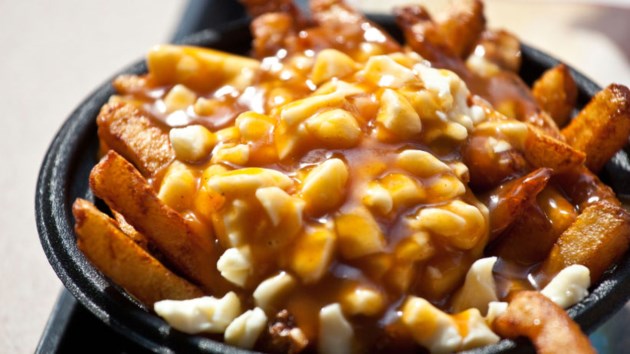
Sometime in May, I was watching the news and saw that the U.S had imposed a 25% tariff on steel and aluminium imports from foreign countries. It didn't really hit me at the time because I (and my family) don't really do politics. As time passed, the media seemed to really like devoting air time to the trade war. And so, as a dutiful American citizen, I surfed the net to try and understand the trade war better. It seemed that Canada was exempt from the tariffs in the beginning, but in the end, the country America shares the longest unguarded border in the world with was also taxed. I kinda groaned inside because I really like Canadians. They've got poutine, and they're really nice (nicer than Americans).

Well, the Canadians got a little mad that they were getting taxed so they taxed America back. I definitely yelled "Yeah" out loud when I heard about that (from my grandparents in Canada). As an ABC (American Born Canadian), I have an awfully conflicted point of view. My background (living in Canada from ages 2-10) probably makes me more Canadian than American. Although I guess I'm an American now, albeit a partly cloudy one.
Image result for poutine

Sunday, September 9, 2018

HE said it, Not me


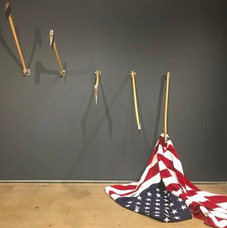
"This fourth of July is yours, not mine." A paradox of the most fabulous kind. A national holiday that isn't celebrated by all it's residents. In the 1800s, slaves were the residents who didn't hold the Fourth of July in very high regard. In fact, the celebration of independence from England only served to remind the slaves that they themselves have not yet obtained freedom. Their rejection of July Fourth as a day of festivities was a result of their struggle to try and win their own independence.

It's now the 21st century. A time of heightened nationalism, Uncle Sam is working harder than ever to keep his stuff on his land and other stuff outta his land. People value their privacy and freedom more and more as technology breaks down barriers between what one person can find out about another. Fourth of July celebrations are increasing in size and becoming highly anticipated events. Even whole cities host firework shows, all to celebrate independence from England. Yet even among such widespread festivities, there are still those who don't really do a lot of celebrating (like my family).
Image result for drooping american flagDon't get me wrong, fireworks are fun to watch and tasty food is nice but that's about all July 4th is to me. I don't feel particularly patriotic to America. As an ABC (American Born Chinese), I'm not quite sure which world power I should be cheering for. To me, America is just that one place that I live in, not my homeland that I'll spill my blood to defend.